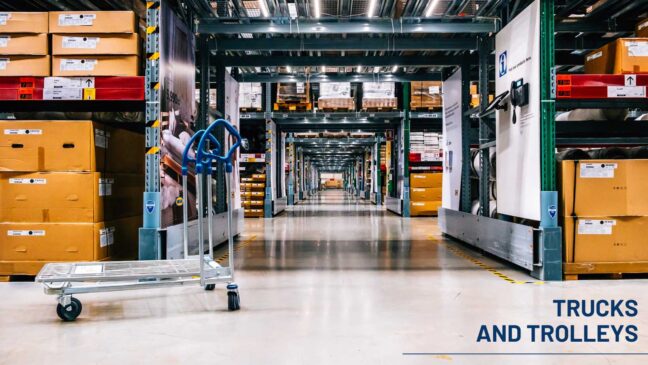
Moving heavy items around your warehouse feels like an uphill battle, doesn’t it? Studies show that proper warehouse material handling trolleys can boost worker productivity by up to 40% whilst reducing injury risks.
This guide breaks down the essential trolley types that transform your logistics operations, making material transport smoother and safer. Your warehouse efficiency is about to get a serious upgrade.
Platform Trolleys for Heavy Loads
Platform trolleys stand as the backbone of warehouse operations across Ireland’s industry. These durable workhorses handle massive loads that would challenge most other transportation solutions.
Built with steel frames and reinforced surfaces, they carry weights ranging from 150kg to over 1000kg capacity. Manufacturing facilities rely on these trolleys to move heavy machinery parts, while distribution centres use them for bulk pallet transfers.
Their flat-bed design makes loading simple, whether you’re dealing with awkward shapes or standard boxes. The four-wheel configuration provides excellent stability during transport, reducing the risk of load shifts or accidents.
Many models feature removable sides or mesh barriers, giving operators flexibility based on their specific cargo needs. Steel construction ensures these trolleys withstand the demanding warehouse environment, making them a smart long-term investment for any logistics operation.
Sack Trucks for Efficient Vertical Transportation
Sack trucks stand as the backbone of vertical material transport in busy warehouses and logistics centres. These two-wheeled workhorses excel at moving heavy boxes, bags, and awkward items upstairs, ramps, and between different floor levels.
Most warehouse teams rely on sack trucks because they reduce worker strain while boosting productivity. The simple design features a flat base plate, tall handle, and sturdy wheels that can tackle various surfaces with ease.
Modern sack trucks come with pneumatic tyres for smooth movement and reinforced frames that handle weights up to 300kg. Many models include folding toe plates for compact storage, while others feature stair-climbing capabilities with special wheel configurations.
Smart warehouse managers choose sack trucks with ergonomic handles and lightweight aluminium construction to keep their teams comfortable during long shifts. The right sack truck can lift productivity levels significantly while protecting workers from back injuries and fatigue.
Moving beyond basic vertical transport, shelf trolleys offer organised solutions for systematic material handling across warehouse floors.
Shelf Trolleys for Organised Material Handling
Shelf trolleys transform warehouse operations by providing multiple tiers of storage space on wheels. These warehouse trolleys feature adjustable shelving units that allow workers to transport various items simultaneously, reducing the number of trips needed across the facility.
Most models include three to five shelves, giving teams the flexibility to sort products by size, weight, or destination. The open design makes it easy to access items from any angle, whilst the sturdy construction ensures safe transport of goods throughout the store environment.
Efficient material handling starts with the right equipment, and shelf trolleys are the backbone of organised warehouse operations.
Manufacturing facilities and distribution centres rely heavily on these versatile units for order fulfillment and inventory management. The wheeled design allows staff to manoeuvre through narrow aisles and tight spaces, making them perfect for busy warehouse environments.
Many shelf trolleys come with removable dividers and adjustable heights, enabling workers to customise the storage configuration based on specific needs. This adaptability makes them essential tools for any operation that values efficiency and organisation in their daily picking and stocking activities.
Folding Trolleys for Compact Storage Solutions
Folding trolleys solve space problems that plague busy warehouses. These clever units collapse flat, taking up minimal storage room during off-peak hours. Workers can quickly unfold them during busy periods, then pack them away again.
This flexibility makes them perfect for seasonal operations or facilities with limited space.
Most folding trolleys feature sturdy steel frames that handle substantial loads despite their collapsible design. The cage structure protects goods during transport while maintaining easy access.
Many models include removable shelves or compartments for different cargo types. Smart warehouse managers often choose these units to maximise floor space without sacrificing functionality.
Roll cage trolleys offer another secure option for moving valuable items safely.
Roll Cage Trolleys for Secure Goods Movement
Roll cage trolleys provide unmatched security for moving valuable goods across warehouse floors. These sturdy units feature mesh sides and lockable doors, which protect items from theft and damage during transport.
Most picking trolley models include removable shelves that let workers organise products by size or priority. The enclosed design prevents items from falling out during movement, making these trolleys perfect for fragile electronics, pharmaceuticals, and high-value merchandise.
Major manufacturers design roll cage trolleys with heavy-duty wheels that glide smoothly over different floor surfaces. The steel construction handles weights up to 500kg while maintaining stability around corners and through narrow aisles.
Many models fold flat for storage, saving precious warehouse space during quiet periods. Workers can stack multiple cages together, creating mobile storage units that move entire product lines efficiently from receiving areas to dispatch zones.
Stair Climbing Trolleys for Multi-Level Transport
While roll cage trolleys excel at secure transport on flat surfaces, stair climbing trolleys tackle the vertical challenge that many warehouses face daily. These specialised units feature motorised tracks or wheels that grip each step, allowing operators to move heavy loads up and down stairs safely.
Most stair climbing trolleys can handle weights between 150-300kg, making them perfect for multi-storey facilities without lifts. The battery-powered motors do the heavy lifting, reducing worker strain and preventing back injuries.
Smart braking systems ensure loads stay stable during descent, while ergonomic handles give operators full control throughout the journey.
Table Trolleys for Versatile Usability
Moving beyond specialised stair climbing solutions, table trolleys offer a different kind of flexibility that many warehouses overlook. These multi-purpose units feature flat, stable surfaces that transform any workspace into a mobile station.
Workers can use them as temporary desks, sorting areas, or even mobile workbenches during inventory checks and order preparation.
Table trolleys excel in environments where staff need to bring work to different locations rather than moving materials to fixed stations. Their height-adjustable features make them suitable for various tasks, from document processing to light assembly work.
Many models include storage compartments underneath the main surface, creating organised spaces for tools, paperwork, or small components that teams access frequently throughout their shifts.
Dollies for Easy Movement of Bulky Items
Dollies serve as the backbone for moving heavy, awkward items across warehouse floors with minimal effort. These wheeled platforms come in various designs, from simple flat-bed models to specialised furniture dollies with carpeted surfaces.
Most dollies feature four swivel casters that allow 360-degree movement, making tight corners and narrow aisles manageable. Heavy-duty versions can handle loads up to 1,000 pounds, while lighter models work perfectly for everyday items like boxes, appliances, and equipment.
Different dolly types solve specific movement challenges in warehouse environments. Furniture dollies protect delicate surfaces with soft padding, while utility dollies offer raised edges to prevent items from sliding off.
Some models fold flat for storage, saving valuable floor space when not in use. The low profile design means workers don’t need to lift items high, reducing strain and injury risk.
Choosing the right dolly depends on your typical load weight, floor surface, and storage requirements. Shelf trolleys offer another organised approach to material handling with their multi-tier design.
Customisable Trolleys for Specific Warehouse Needs
Standard trolleys don’t always fit every warehouse operation. Customisable trolleys solve unique challenges that generic models can’t handle. These adaptable units let you modify height, add shelving, or include special attachments.
Warehouses dealing with unusual product sizes benefit most from these flexible solutions. Custom trolleys can feature adjustable compartments, removable dividers, or specialised grips for specific items.
Smart warehouse managers invest in trolleys that grow with their needs. Modular designs allow quick reconfiguration without buying entirely new equipment. You can swap out wheels for different floor types, adjust handle heights for various operators, or add safety features like brakes and guards.
The initial cost might seem higher, but custom trolleys reduce long-term replacement expenses while boosting productivity. Choosing the right trolley type becomes crucial for maximising these benefits across your entire logistics operation.
Importance of Choosing the Right Trolley for Logistics
While customisable trolleys offer perfect solutions for unique warehouse challenges, selecting the correct trolley type becomes critical for smooth logistics operations. Wrong trolley choices create bottlenecks, increase worker fatigue, and damage goods during transport.
Smart warehouse managers analyse their specific needs first, then match trolley features to daily tasks. Heavy-duty platform trolleys work best for bulky items, whilst lightweight folding models suit tight storage areas.
Each trolley type serves different purposes, and mismatched equipment leads to inefficient workflows and higher operational costs.
Proper trolley selection directly impacts productivity levels and worker safety across warehouse floors. Teams move faster with appropriate equipment, reducing time spent on material handling tasks.
Quality trolleys last longer, require less maintenance, and provide better return on investment. Poor choices result in frequent replacements, increased downtime, and frustrated staff members.
Logistics success depends on smooth material flow, and the right trolleys make this possible every single day.
Conclusion
Choosing the right trolleys transforms your warehouse operations from chaos to smooth efficiency. Each type serves a specific purpose, whether you’re moving heavy pallets or climbing stairs with delicate goods.
Smart trolley selection reduces worker strain, speeds up operations, and cuts down on costly damage to products. Your logistics team deserves equipment that works as hard as they do.
Invest in quality material handling trolleys and watch your warehouse productivity soar while keeping your staff safe and satisfied.
FAQs
What types of material handling trolleys are essential for warehouse operations?
Platform trolleys, cage trolleys, and shelf trolleys form the backbone of efficient warehouse logistics. These versatile units handle everything from heavy pallets to delicate stock items. Each type serves specific storage and transport needs within your facility.
How do material handling trolleys improve warehouse efficiency?
Trolleys reduce manual lifting and speed up stock movement across warehouse floors. Workers can transport multiple items in one trip, cutting down on time and physical strain.
What weight capacity should I look for in warehouse trolleys?
Most warehouse trolleys handle between 150kg to 500kg, depending on your logistics requirements. Heavy-duty models can manage up to 1000kg for industrial applications.
Are there specific safety features to consider when choosing material handling equipment?
Look for trolleys with secure braking systems, non-slip surfaces, and sturdy wheel assemblies. Proper safety rails and ergonomic handles prevent accidents during daily warehouse operations.